Why Whiteboards Matter in Healthcare Communication
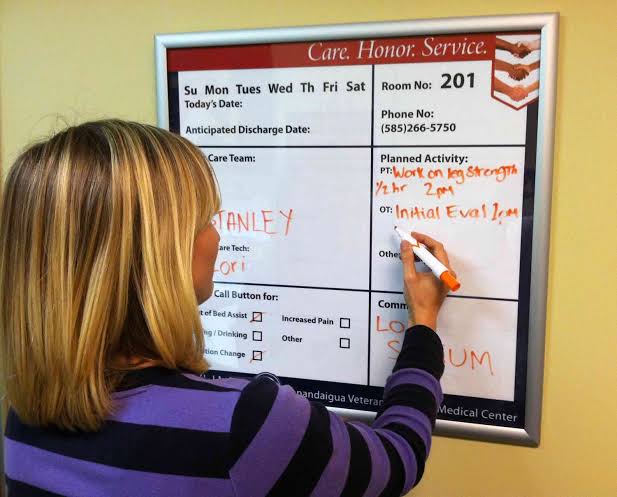
Whiteboards matter in healthcare communication because they give patients, families, and care teams a shared, visible place for daily goals, care team names, schedules, and key information. In patient rooms, nurse stations, and huddle areas, writing surfaces support the clear communication that coordinated care depends on.
The United States has more than 6,000 hospitals (American Hospital Association).
How are whiteboards used in patient rooms?
Whiteboards in patient rooms are used to display the names of the current nurse and physician, daily goals, planned tests, pain management information, and discharge plans. Patients and family members can see at a glance who is caring for them and what to expect.
Common information on patient room boards
- Care team names for the current shift
- Date and daily plan of care
- Scheduled tests and procedures
- Mobility and activity goals
- Questions for the care team
- Anticipated discharge date
Strategies that encourage patient and family engagement are part of federal resources for improving patient safety and quality (Agency for Healthcare Research and Quality). Visible, updated information in patient rooms is one practical way to support that engagement.
Why porcelain suits patient room boards
Porcelain suits patient room boards because the surface is magnetic, erases cleanly, and resists scratching and staining (ASI Visual Display Products).
Why does communication matter for patient experience?
Communication matters for patient experience because patients who understand their care plan and know their care team tend to feel more informed and involved. Uncertainty adds stress during a hospital stay.
Continuity across shift changes
Whiteboards provide continuity across shift changes. When one nurse leaves and another arrives, the board shows the new name and keeps key information visible for the patient and family.
How are whiteboards used at nurse stations and huddle areas?
Whiteboards at nurse stations and huddle areas are used to track assignments, bed status, staffing, safety alerts, and daily priorities. Visual management helps teams coordinate in fast-paced environments.
Common uses in clinical work areas
- Patient assignments by nurse
- Bed and room status
- Daily safety huddle topics
- Performance and quality metrics
- Equipment and supply notes
Daily safety huddles, where teams gather briefly to review risks and priorities, often center on a whiteboard that captures key points for the day.
What surface features matter in healthcare settings?
Surface features that matter in healthcare settings include easy cleaning, resistance to chemical disinfectants, and resistance to ghosting. Boards are cleaned frequently and written on constantly. Porcelain surfaces are well suited to these conditions because the hard, nonporous enamel resists stains and tolerates a range of cleaning products.
Surface priorities for healthcare
- Nonporous surfaces that clean easily
- Resistance to healthcare disinfectants
- Ghost-free erasing after frequent use
- Magnetic capability for posting materials
- Durable edges and frames
How does cleaning fit into infection prevention?
Cleaning fits into infection prevention because frequently touched surfaces in patient care areas can harbor pathogens. Environmental cleaning is part of broader strategies to prevent healthcare-associated infections (Centers for Disease Control and Prevention).
Including boards in cleaning routines
Whiteboards and their marker trays should be included in cleaning routines. Choosing surfaces that tolerate facility-approved disinfectants without damage allows environmental services teams to clean them effectively.
How should patient room boards be designed?
Patient room boards should be designed with clear, pre-printed sections that guide staff to update key information consistently. Standardized layouts make boards easier to read and maintain across a unit.
Design recommendations
- Pre-printed headers for key information categories
- Large, readable text areas
- Placement visible from the patient bed
- Room for family questions and notes
- Consistent layout across rooms on the unit
Some facilities use magnetic strips or printed inserts for frequently repeated items, which speeds updates and improves consistency.
Where should boards be placed in patient rooms?
Boards should be placed where patients can see them from the bed and where staff can update them easily when entering the room. Common locations include the wall opposite the bed or beside the entry.
Avoiding equipment conflicts
Placement should avoid conflicting with medical equipment, headwalls, or television mounts. Coordinating locations during design ensures boards are both visible and practical.
How do whiteboards support staff communication at shift change?
Whiteboards support staff communication at shift change by providing a quick reference for patient priorities and plans. Incoming staff can confirm key details during bedside handoffs.
Boards in bedside shift reports
Bedside shift reports, in which nurses review information with the patient present, often reference the room whiteboard. Updating the board during the handoff keeps patients involved and informed.
What maintenance keeps healthcare whiteboards effective?
Maintenance that keeps healthcare whiteboards effective includes daily updates, regular cleaning, replacing dried markers, and inspecting for ghosting or damage. A board with outdated or illegible information undermines its purpose.
Maintenance practices
- Update information at every shift change
- Clean with facility-approved products
- Replace dried or faint markers promptly
- Inspect for ghosting and damage
- Replace worn pre-printed sections as needed
How do whiteboards support family involvement?
Whiteboards support family involvement by giving relatives a visible place to note questions for the care team and see updates when they visit. Family members who are not present during rounds can still see the daily plan and the names of the people caring for their loved one.
A section for family questions
Leaving a dedicated section for family questions encourages communication. Staff can review the section during their next visit, answer questions directly, and update the board, which helps families feel included in the care process without needing to catch clinicians at specific times.
Why are whiteboards a simple tool with lasting impact?
Whiteboards are a simple tool with lasting impact because they make information visible to everyone involved in a patient’s care. Clear communication supports safety, reduces confusion, and helps patients feel involved. In a setting filled with complex technology, a well-maintained whiteboard remains one of the most effective ways to keep patients, families, and care teams on the same page.